


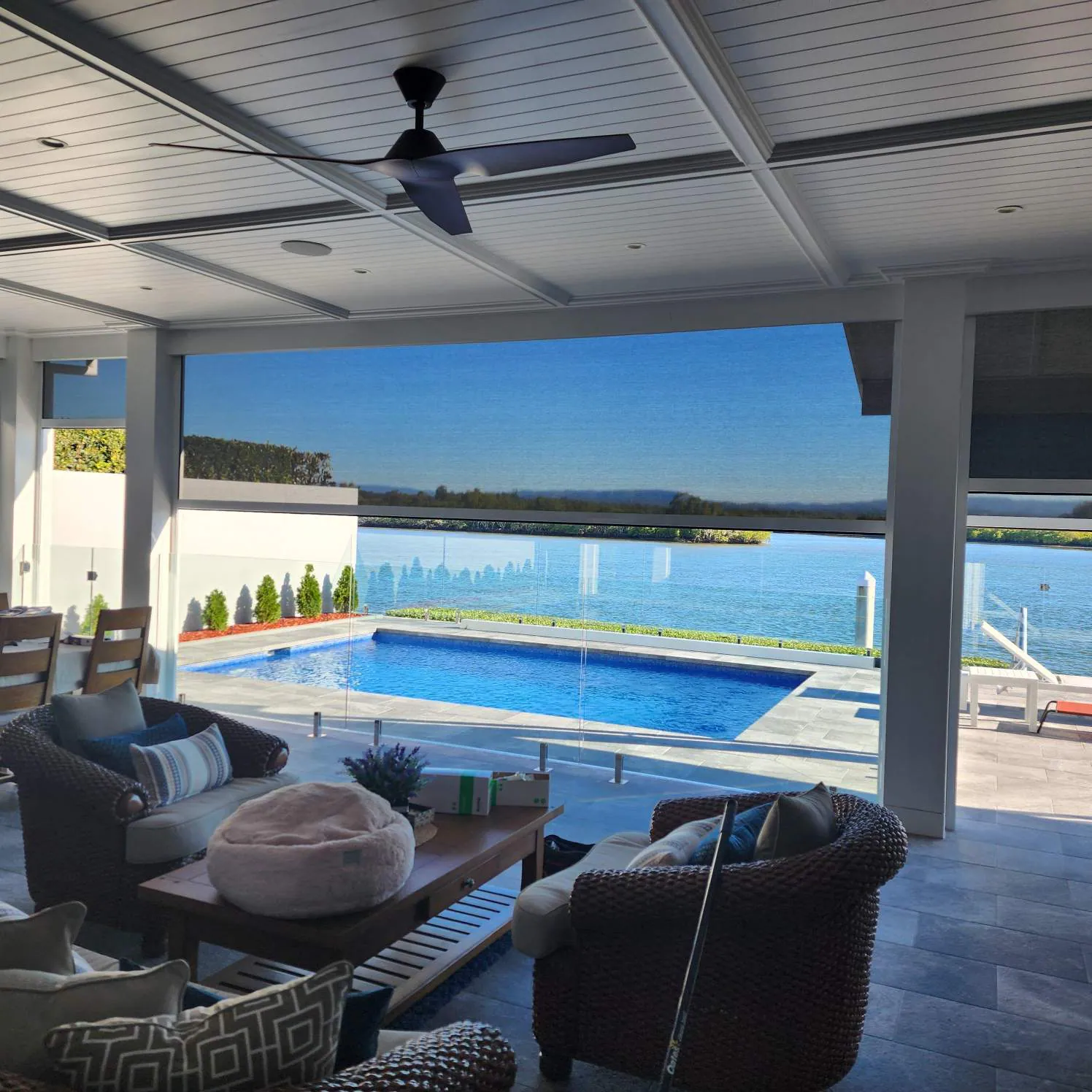
Outdoor living
Outdoor blinds: what to consider before you buy
Done well, outdoor blinds add a room to the house. Done carelessly, they are an expensive thing you never close.
·7 min read
Decide what you want the space to become
This is the question everything else follows from. Do you want to take the edge off the afternoon sun while keeping the view and the breeze? Or do you want to be able to close the space up completely and sit out there in a downpour?
Those are different products. Trying to get both from one blind is where most disappointment comes from, though a mixed approach across several openings often gets you closer than a single compromise.
Fabric decides the character
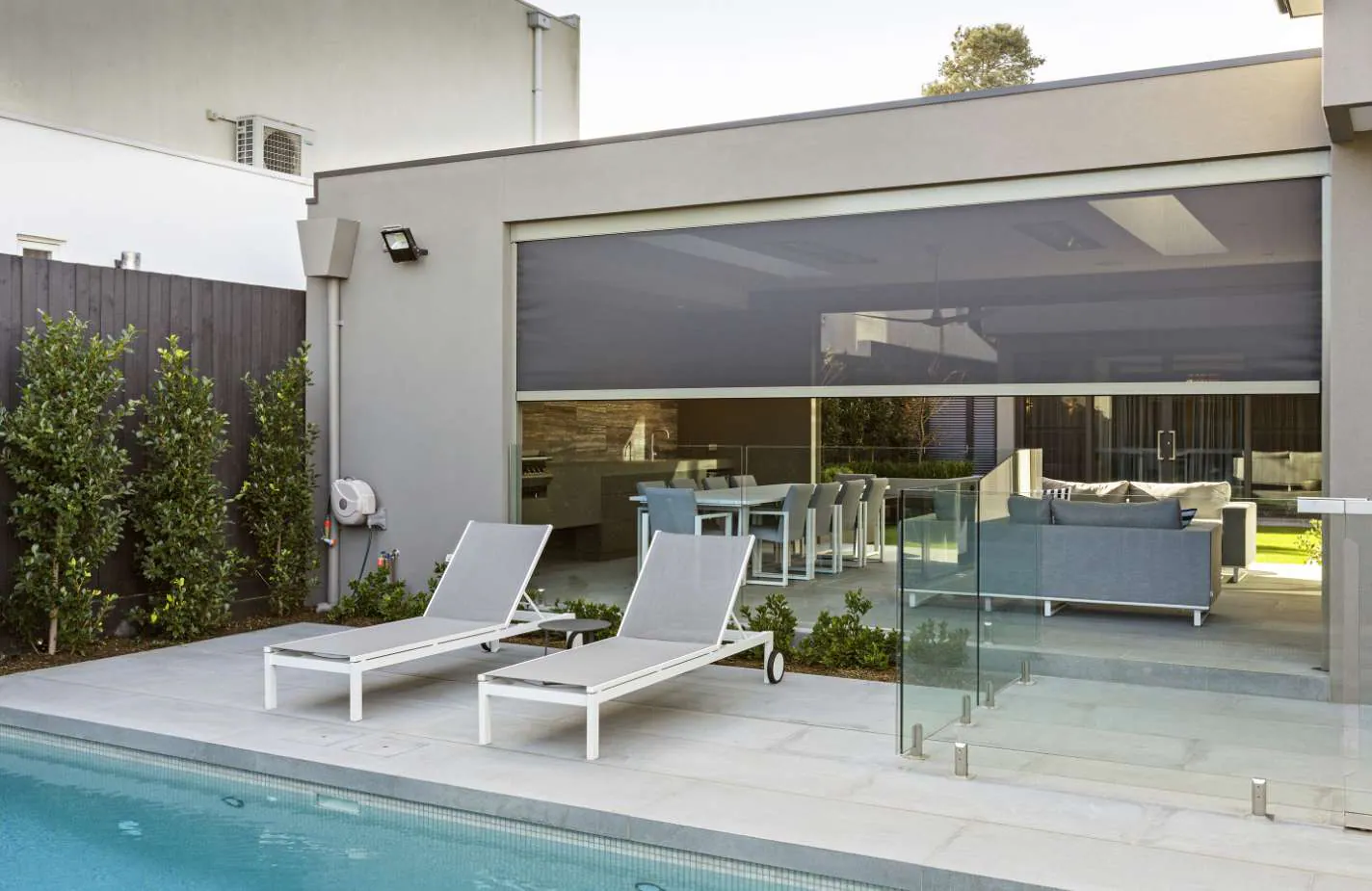
- Mesh or sunscreen: shades, cuts glare and blocks insects while keeping the view and airflow. The most popular choice for everyday use.
- Tinted or clear PVC: full weather protection with the view intact, which turns a patio into a genuinely usable winter room.
- Blockout: complete privacy and weather protection, at the cost of the view and the light.
- Combination: mesh on the view side, blockout on the exposed or overlooked side.
Span, headbox and fixings
Wide openings need either a wider blind or a split into multiple blinds, and there are practical limits to how wide a single blind can go before weight and deflection become a problem. Standard systems handle substantial spans, with extreme-rated configurations available for larger or more exposed openings.
The headbox is where the rolled fabric sits when the blind is up. It needs somewhere to mount, and that is often the constraint that shapes the design — particularly under a low eave or against a bulkhead. It is one of the first things worth checking on site.
Manual or motorised
Track-guided manual blinds are genuinely pleasant to use — push up, pull down, stop anywhere. For an opening you operate daily at a comfortable height, manual is entirely adequate and considerably cheaper.
Motorisation earns its place on wide, heavy or high blinds, and on runs of several blinds you want to move together. Wind sensors are available and worth considering in exposed positions, since they retract the blind automatically rather than relying on someone being home.
Wind, and why track systems matter
A free-hanging outdoor blind flaps, wears and eventually tears. A track-guided system retains the fabric in a channel down each side, which is what allows it to seal at the edges and cope with wind.
On the Gold Coast that is not a luxury. Between sea breezes and summer storms, the edge retention is what determines whether the blind is still doing its job in five years.
The insect point
It is the benefit people mention most after the fact. Because a track-guided blind seals down both sides, it excludes mosquitoes and midges in a way that a curtain or a free-hanging awning cannot. On a Gold Coast summer evening that is often what turns an outdoor area from theoretically nice into actually used.
Good to know
Common questions
How wide can an outdoor blind be?
Standard systems cover substantial spans, and extreme-rated configurations extend that further for wide or exposed openings. Very wide areas are often better split into two blinds, which also makes each one lighter to operate.
Can you use outdoor blinds in the rain?
Yes. PVC and blockout fabrics give full weather protection, and mesh sheds light rain while still allowing airflow. Track-guided systems seal at the edges, which is what stops rain being driven in from the sides.
Free in-home consultation
Talk it through with someone who fits these every day
Reading only gets you so far. We bring samples to your home, measure up and quote — free, across the Gold Coast, Queensland.