


Buying guide
Roller blinds explained
The most common blind in Australian homes, and the one with the most options hiding behind a simple appearance.
·6 min read
Why rollers are so common
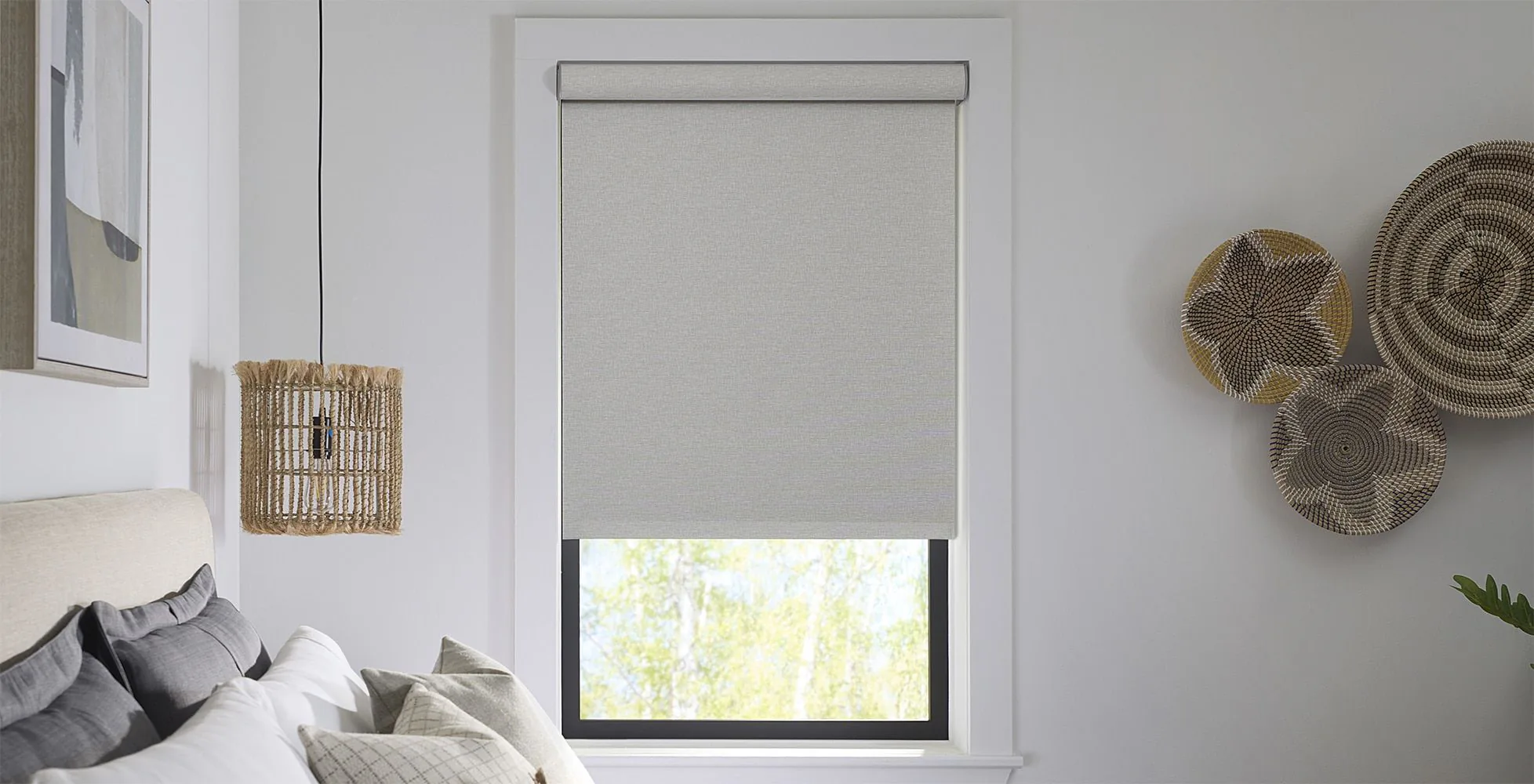
A roller blind is the simplest way to cover a window: a flat panel of fabric on a tube. That simplicity is exactly why it works so well. It suits almost any window size, takes up very little space when open, and comes in the widest fabric range of any blind type.
It is also the most economical way to get a good result on a plain window, which is why rollers appear in nearly every home we work in even when other products are used elsewhere.
The configurations
- Single: one blind, one fabric. The standard, and the right answer for most bedrooms.
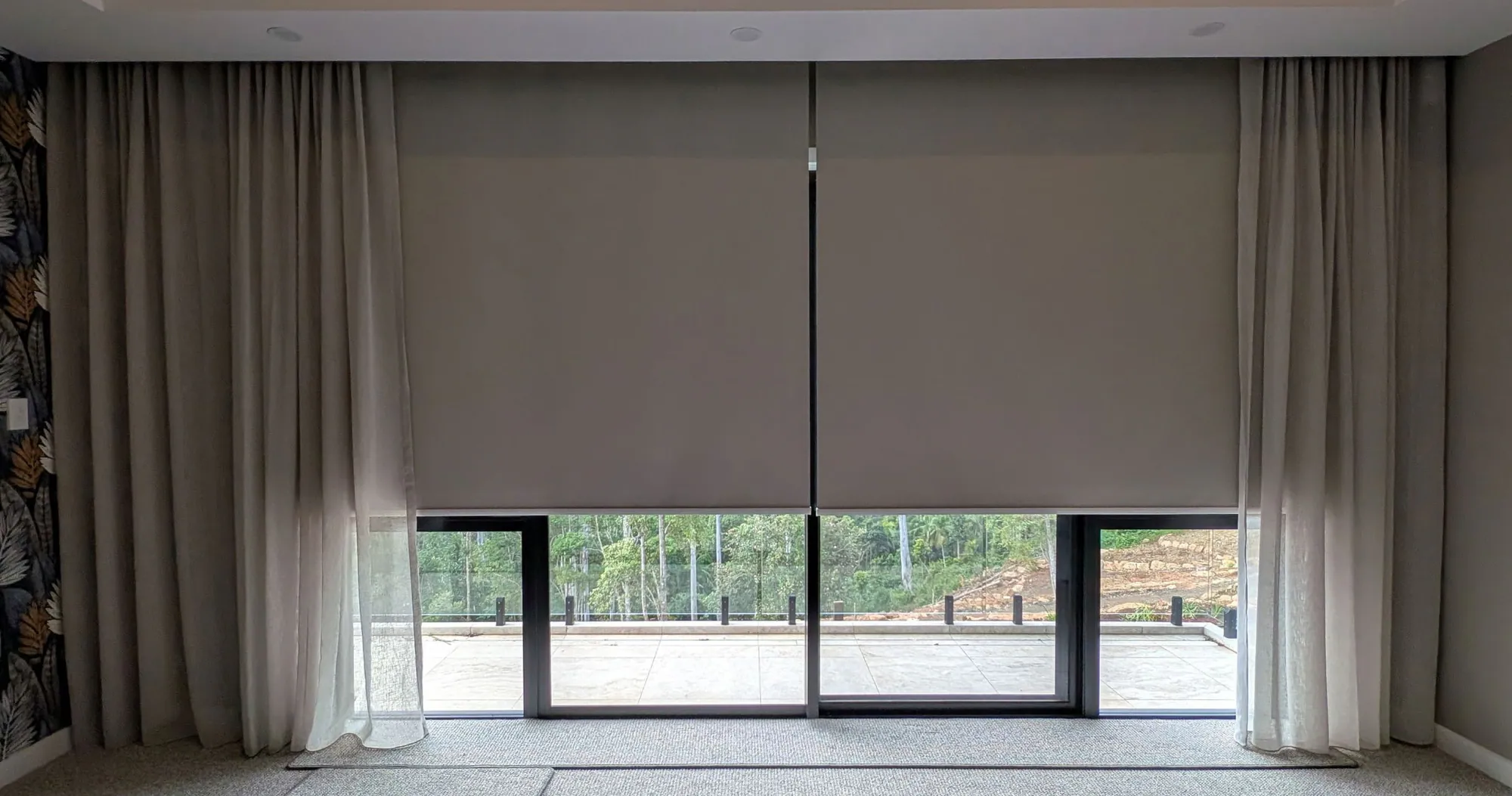
- Double or dual: two blinds on one bracket, typically a sunscreen and a blockout, so you can switch between glare control and full darkness on the same window.
- Linked: adjacent blinds joined so they operate together, which removes the hanging chains between them across a run of windows.
- Independent linked: linked for appearance but still operable separately.
Controls
The traditional chain control is reliable and inexpensive, and modern versions include childsafe systems designed around the cord safety concern. Spring-assisted rollers do away with the chain and are operated by a bar at the base, which suits homes with young children.
Motorisation is the other option, and it makes most sense on high, wide or heavy blinds — or where you want them to operate on a schedule. Battery, hardwired and wire-free motors are all available depending on what the window allows.
Fabric decides everything
The configuration matters, but the fabric determines whether you are happy with the blind. Blockout for bedrooms, sunscreen where you want glare control with a view, light filtering where you want brightness with privacy.
One detail worth knowing: on a blockout roller, light will still enter through the small gaps at the sides. If a genuinely dark room is the goal, that needs solving at the fitting stage with side channels, an outside-reveal fit, or layered curtains.
Finishing details
- Cassette or headbox: encloses the rolled fabric for a neater finish and blocks light spill over the top
- Bottom rail: enclosed rails look tidier than exposed ones and hang better
- Roll direction: standard roll sits away from the glass, reverse roll sits closer — reverse can clear obstructions like handles
- Fascia colour: worth matching to the frame or the wall rather than defaulting to white
Good to know
Common questions
What is a double roller blind?
Two roller blinds mounted on a single bracket, usually a sunscreen paired with a blockout. You use the sunscreen during the day for glare control with a view, and pull down the blockout for privacy or darkness.
Are roller blinds good for bedrooms?
Yes, with a blockout fabric and attention to the edges. A blockout roller fitted inside the reveal will let light in at the sides, so fit it outside the reveal, add side channels, or layer with curtains if you want the room genuinely dark.
Free in-home consultation
Talk it through with someone who fits these every day
Reading only gets you so far. We bring samples to your home, measure up and quote — free, across the Gold Coast, Queensland.