


Buying guide
Timber, PVC or aluminium shutters?
They look similar from across the room, but they behave very differently. The right choice usually comes down to which room it is going in.
·7 min read
They are more different than they look
From a few metres away a timber, PVC and aluminium shutter can look almost identical. Up close, and over years of use, they behave very differently. Choosing well is mostly a matter of matching the material to the conditions in the room.
Timber
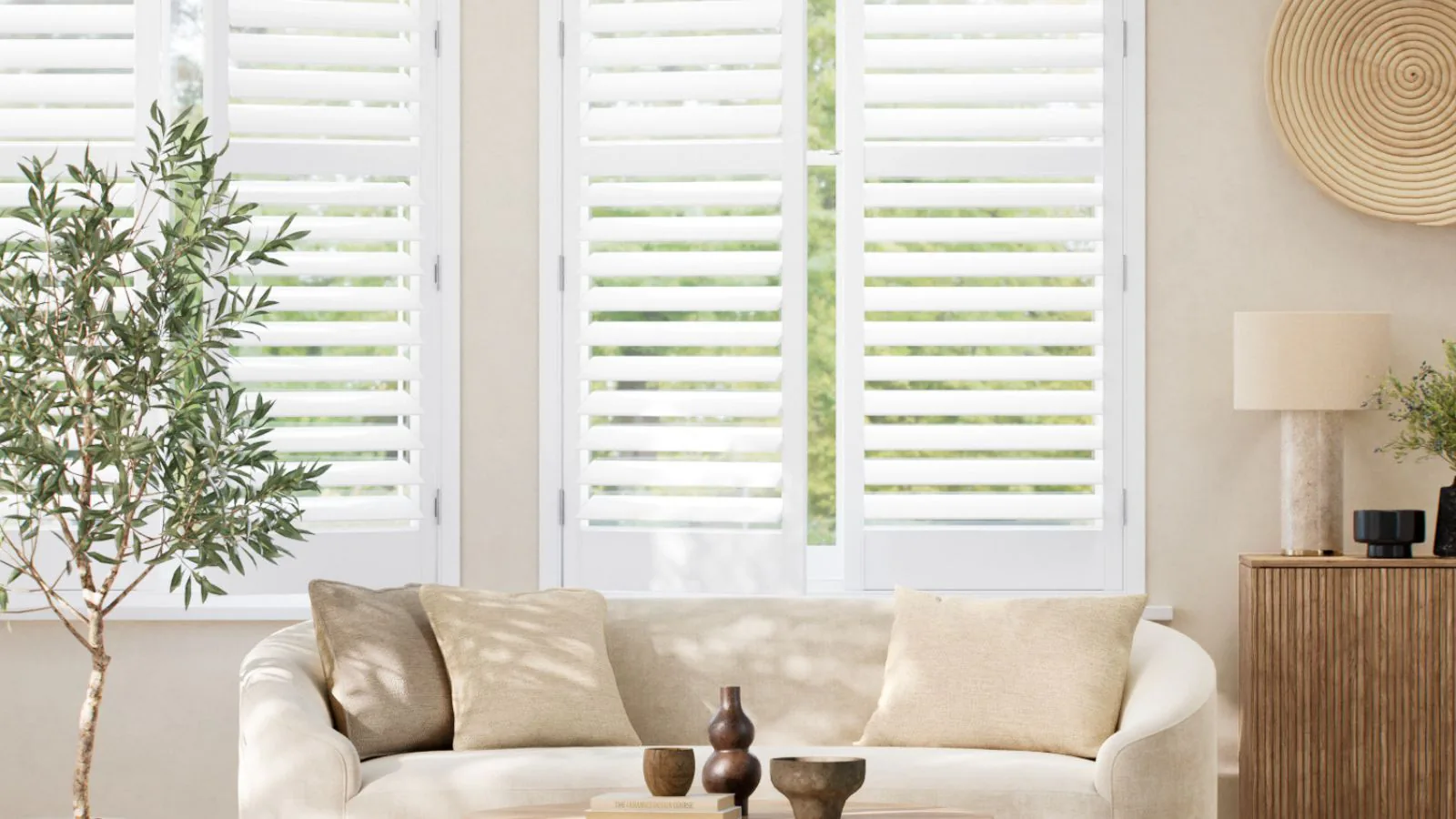
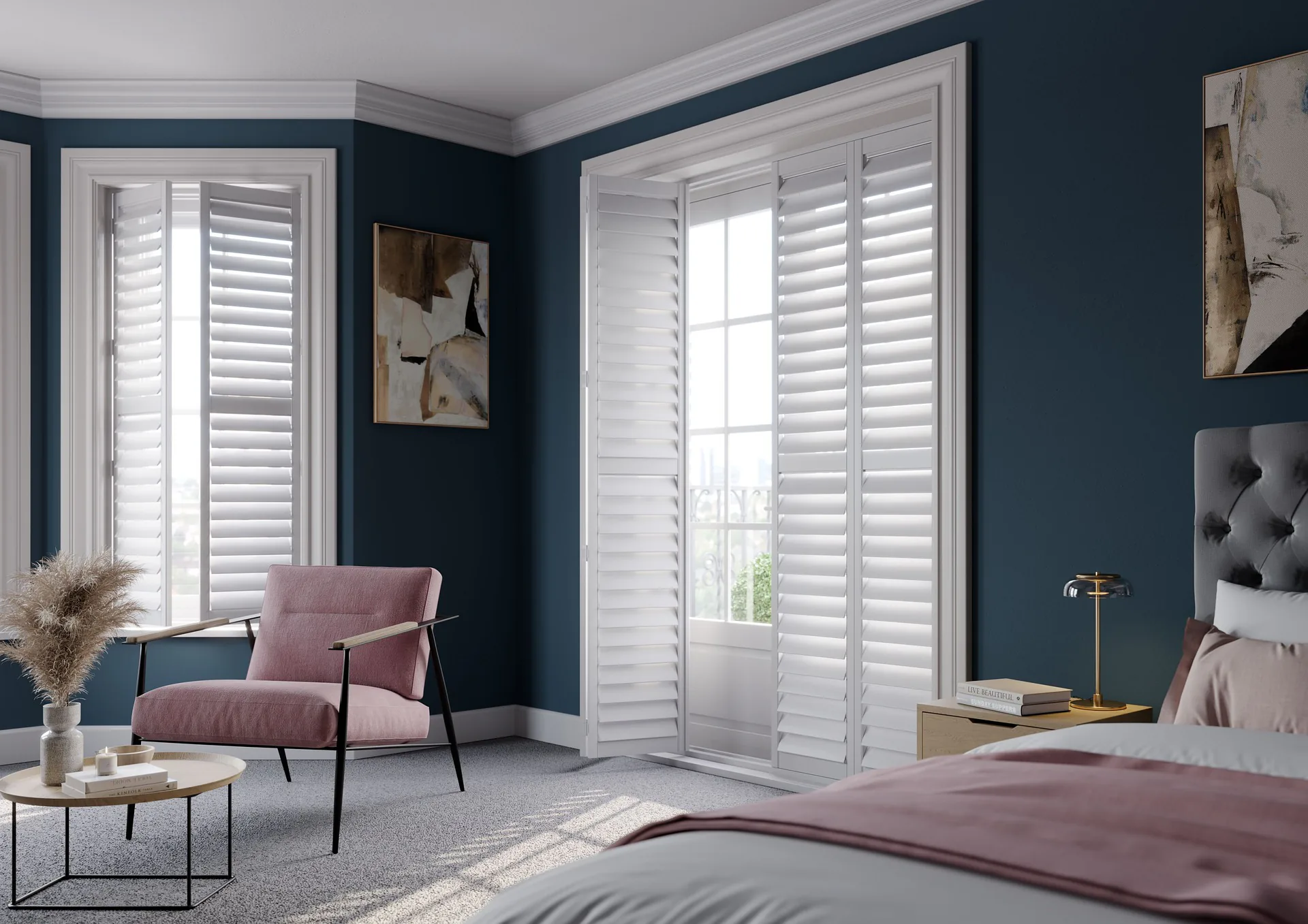
Timber shutters are the benchmark for appearance. A quality basswood shutter has a depth and warmth that manufactured materials approximate but do not quite match, and it takes both paint and stain beautifully.
Timber is also light for its strength, which matters on large panels where weight affects how the shutter hangs and operates over time. The trade-off is that timber responds to moisture. In a dry living space that is a non-issue; in a wet area it is the wrong choice.
- Best for: bedrooms, living rooms, studies, formal spaces
- Avoid: bathrooms, ensuites, laundries, exposed windows
- Finish: painted or stained, with custom colour matching available
PVC
PVC shutters are the practical choice and the value choice. They are waterproof, will not warp or rust, are not attractive to insects, and wipe clean. That combination makes them the default for bathrooms, ensuites, laundries and kitchens.
They are also heavier than timber for the same panel size, which is why wider openings are often built with a hybrid construction: a hardwood frame carrying PVC blades, giving you the moisture resistance without the weight.
- Best for: bathrooms, ensuites, laundries, kitchens, budget-conscious whole-house fit-outs
- Watch: panel weight on very wide openings
- Finish: a range of standard colours, wipe-clean surface
Aluminium
Aluminium shutters are the outdoor and exposed-application answer. Rust free, coastal approved, and available in powder-coat finishes that hold up to sun and salt. They are used for privacy screens, outdoor room dividers, and windows that take weather directly.
Inside the house they read as more contemporary than timber, with cleaner lines and a matt finish. Whether that suits depends entirely on the architecture.
- Best for: outdoor areas, privacy screens, exposed and coastal windows
- Look: modern, clean lines, matt powder-coat
- Durability: the strongest of the three in weather
How to decide quickly
If the room is dry and you want the best possible finish, choose timber. If the room gets wet or steamy, choose PVC. If the shutter is outside or takes weather, choose aluminium. If the opening is wide and damp, a hybrid gives you most of both.
That covers the large majority of homes. The remainder come down to budget and to how the shutter sits against the rest of the interior, which is much easier to judge with a sample in the actual room.
Good to know
Common questions
Do PVC shutters look cheap compared to timber?
Modern PVC shutters are convincing, particularly in white and off-white where most shutters are specified. The difference is most visible in stained finishes, where timber grain cannot really be replicated.
Which shutter material lasts longest?
In a dry interior, all three will last a very long time. In wet or exposed conditions, aluminium and PVC will outlast timber comfortably. Warranties differ by range, so it is worth asking about structural and finish cover separately.
Free in-home consultation
Talk it through with someone who fits these every day
Reading only gets you so far. We bring samples to your home, measure up and quote — free, across the Gold Coast, Queensland.